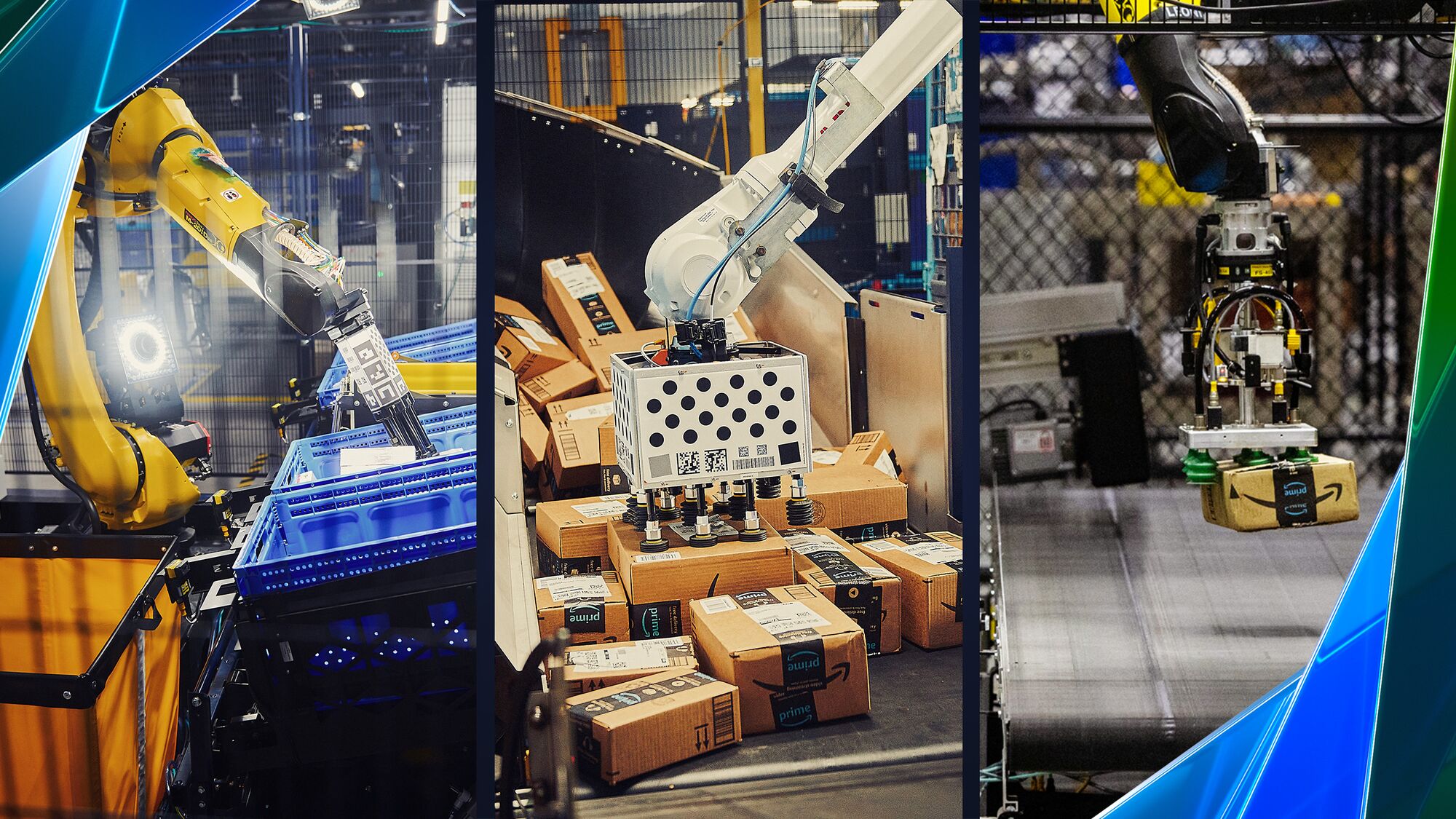
Amazon's journey from a modest online bookstore operating out of a garage to a global AI powerhouse is a testament to relentless innovation and visionary leadership. Founded by Jeff Bezos in 1994, Amazon initially focused on selling books before rapidly diversifying into the "everything store."
Today, under CEO Andy Jassy, Amazon is deeply invested in artificial intelligence, with significant advancements in robotics, the evolution of its Alexa voice assistant, the development of agentic AI, and the Amazon Bedrock platform empowering generative AI development, all while maintaining a focus on responsible AI.
1. The Genesis of Amazon: Jeff Bezos's Vision and Early Days
Jeff Bezos's Pre-Amazon Career
Before Jeff Bezos became a household name synonymous with e-commerce giant Amazon, his career trajectory was already marked by a keen intellect and a drive for innovation. Born on January 12, 1964, in Albuquerque, New Mexico, Bezos demonstrated an early aptitude for technology and entrepreneurship. [43]
He pursued his higher education at Princeton University, where he initially considered physics but ultimately graduated summa cum laude in 1986 with degrees in Electrical Engineering and Computer Science. [41]
It was during his tenure at D.E. Shaw, while examining investment opportunities on the nascent internet, that Bezos encountered a startling statistic: web usage was growing at an astonishing rate of 2,300% per year. This revelation about the internet's explosive potential became a pivotal moment, sparking his entrepreneurial imagination. [36]

"Bezos later recounted his thought process using a 'regret minimization framework,' contemplating whether he would regret not trying to participate in the internet boom more than he would regret failing at a start-up."
— [39]
The Garage Era and Initial Operations
The iconic image of Amazon's beginnings in a garage is a testament to the company's humble origins and resourceful spirit. In 1994, Jeff and MacKenzie Bezos set up their fledgling online bookstore in the garage of a rented three-bedroom house on Northeast 28th Street in Bellevue, Washington. [1]
To save costs, Bezos famously built desks by attaching legs to doors purchased from Home Depot, a practice that continued even after the company relocated. These "door desks" became a legendary symbol of Amazon's frugality and resourcefulness in its early years.
The beta website was tested by 300 friends and acquaintances, and when Amazon officially opened its site to the world on July 16, 1995, it quickly demonstrated its potential. Within 30 days, with no formal press, Amazon had sold books in all 50 U.S. states and 45 foreign countries. [4]
2. Amazon's Meteoric Rise: Key Milestones and Expansion
The 1997 IPO and Early Growth
Amazon's journey from a garage startup to a publicly traded company was remarkably swift. On May 15, 1997, less than three years after its founding, Amazon conducted its Initial Public Offering (IPO) on the NASDAQ stock exchange under the ticker symbol AMZN. [275]
The company offered its stock at $18 per share, raising approximately $54 million in capital. This IPO was a critical milestone, providing Amazon with the necessary funds to fuel its aggressive growth strategy.
1997 IPO Timeline
March 1997
S-1 filing prepared in 12 days
May 15, 1997
IPO at $18 per share
First Day Close
$23.50 per share ($438M valuation)
Launch of Amazon Web Services (AWS) and the Kindle
Beyond diversifying its retail offerings, Amazon also made groundbreaking strides in technology services and hardware, most notably with the launch of Amazon Web Services (AWS) and the Amazon Kindle e-reader.
AWS, which officially launched in 2006 with the introduction of Amazon Simple Storage Service (S3) and Amazon Elastic Compute Cloud (EC2), was a pivotal development that would transform the IT industry. [289]
In a different but equally transformative vein, Amazon launched the Amazon Kindle e-reader in November 2007. By 2010, Amazon was selling more eBooks than physical books, a testament to the Kindle's impact on reading habits. [275]
3. Amazon's Early Forays into Artificial Intelligence
Pioneering Recommendation Algorithms
Long before AI became a mainstream buzzword, Amazon was quietly laying the groundwork for its future AI dominance, starting with its pioneering work on recommendation algorithms. In the late 1990s, as the company rapidly expanded its online marketplace, it recognized the need to help customers navigate its ever-growing catalog of products.
These early recommendation engines were a form of collaborative filtering, a technique that identifies patterns in user behavior to make predictions. This seemingly simple concept was revolutionary at the time, transforming the online shopping experience from a passive search to a more personalized and engaging journey.
Search Relevance
AI-powered search algorithms that understand user intent and contextualize queries
Fraud Detection
AI systems to analyze transaction patterns and identify suspicious behavior
Supply Chain
AI applications for demand forecasting and logistics optimization
4. Amazon's Deep Dive into Robotics
The Strategic Acquisition of Kiva Systems
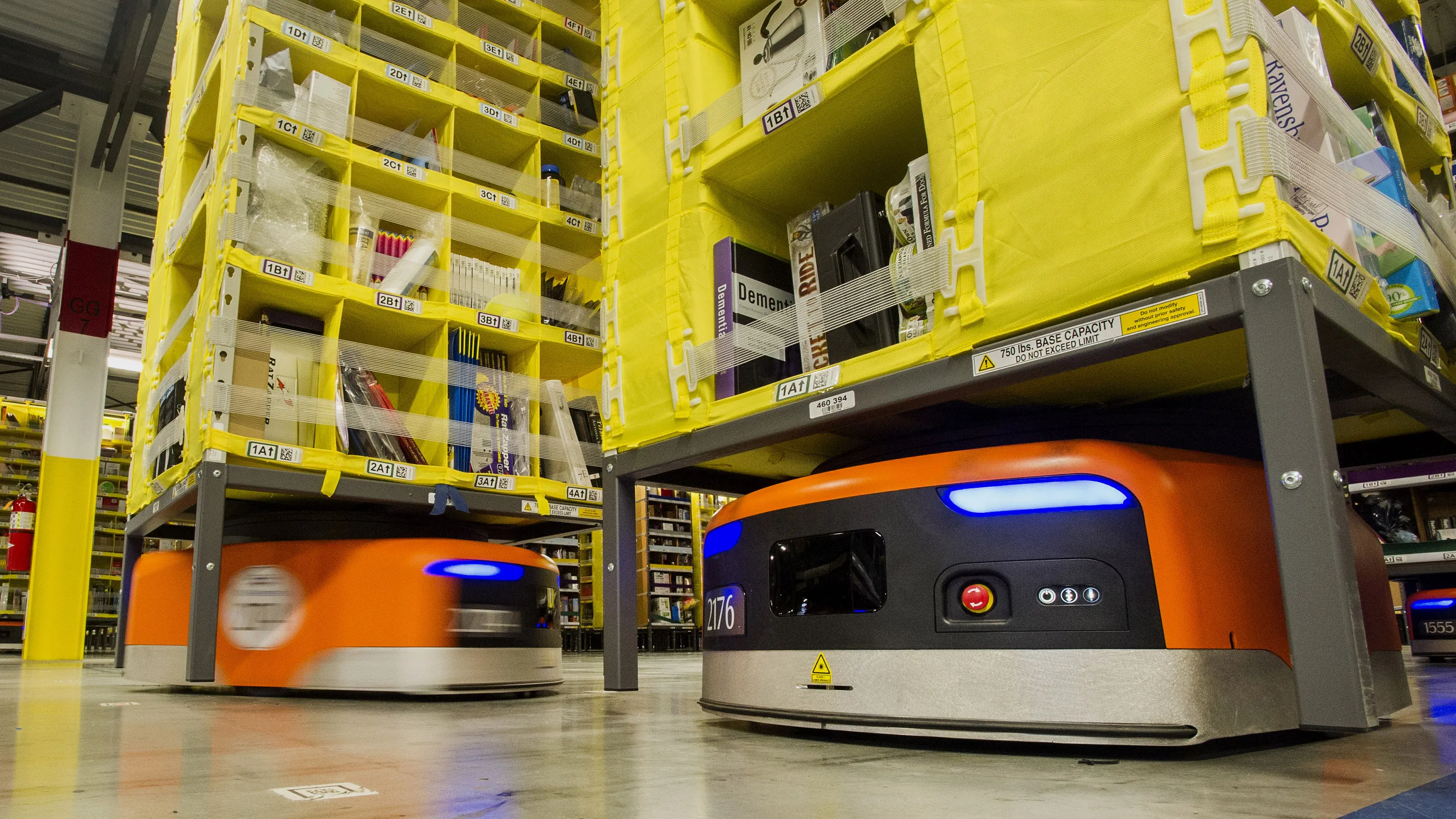
A pivotal moment in Amazon's journey towards automation and operational efficiency was its acquisition of Kiva Systems in March 2012. Amazon agreed to purchase the North Reading, Massachusetts-based company for approximately $775 million in cash. [55]
Kiva Systems had developed a revolutionary material handling technology that utilized fleets of autonomous mobile robots (AMRs) to automate the picking and packing process in warehouses. These robots, often described as resembling large orange ottomans, were designed to zip across warehouse floors, transporting entire shelves stocked with goods directly to human operators.
Robotics Impact by Numbers
| Robot Name | Type/Function | Key Features/Innovations |
|---|---|---|
| Hercules | Autonomous Mobile Robot (AMR) | Moves entire shelving units to workers, reducing walking time |
| Titan | Autonomous Mobile Robot (AMR) | Larger, stronger version capable of lifting twice as much |
| Proteus | Fully Autonomous Mobile Robot | Safely navigates alongside humans without barriers |
| Sparrow | Multi-jointed Robotic Arm | Employs computer vision and AI to handle individual items |
| Digit | Humanoid Robot | Being tested for future roles like trailer unloading |
Prime Air: The Future of Drone Delivery
Beyond its extensive use of robotics within fulfillment centers, Amazon has been actively pursuing the futuristic vision of drone delivery through its Prime Air initiative. This project aims to deliver packages to customers in 60 minutes or less using autonomous drones. [62]
Amazon has conducted extensive testing, including over 6,300 flights and 1,070 flight hours for its latest drone model, the MK30. As of May 2025, Amazon drones were capable of delivering over 60,000 different items weighing 5 pounds or less.
5. The Dawn of Agentic AI at Amazon
Defining Agentic AI
Agentic Artificial Intelligence (AI) represents a significant evolution from traditional AI models, which are often reactive or assistive, to systems capable of proactive, autonomous action to achieve defined goals. Unlike AI services such as chatbots that primarily respond to user prompts, agentic AI systems are designed to understand complex objectives, often communicated in natural language, and then independently plan, execute, and adapt a series of actions to fulfill those objectives.
"Amazon CEO Andy Jassy has described agents as software systems that use AI to perform tasks on behalf of users or other systems, capable of scouring the web and various data sources, summarizing results, engaging in deep research, writing code, detecting anomalies, highlighting insights, and translating languages or code."
— [132]
Formation of the Lab126 Agentic AI Group
Recognizing the transformative potential of agentic AI, Amazon has strategically established dedicated teams to spearhead its development. One such initiative is the formation of a new agentic AI group within Lab126, Amazon's Silicon Valley-based research and development unit responsible for iconic devices like the Kindle e-reader and Echo smart speaker. [17]
The AGI SF Lab: Pioneering Advanced AI Agents
In a significant move to bolster its capabilities in advanced artificial intelligence, Amazon established the Amazon AGI SF Lab in San Francisco, a dedicated research and development team focused on building foundational capabilities for AI agents. This lab, seeded by a team hired from AI startup Adept, is led by David Luan, co-founder of Adept and a former vice president of engineering at OpenAI. [162]
Research Focus Areas
- Real-world action execution
- Learning from human feedback
- Self-correction mechanisms
- User goal inference
Amazon Nova Act
The lab's flagship model, specifically trained to make decisions about what actions to take and when, outperforming models from OpenAI and Anthropic on several benchmarks.
Real-World Applications: "Buy for Me" Agent
Amazon is actively developing and deploying AI agents for practical, real-world applications. One prominent example is the "Buy for Me" agent, an AI-powered shopping tool currently being tested with a subset of users, designed to help customers complete purchases from other merchants' websites. [612]
6. Alexa: Amazon's Voice-Activated AI Assistant Evolves
The Evolution of Alexa
Since its unveiling in November 2014 alongside the Echo smart speaker, Amazon's Alexa has undergone a remarkable evolution, transforming from a relatively simple voice command interface into a sophisticated conversational AI platform. [108]
Early Capabilities
- Playing music
- Setting alarms
- Weather updates
- Smart home control
Advanced Features
- Contextual conversations
- Third-party skills
- Hunches and predictions
- Multimodal interactions
Alexa+: Integrating Generative AI
Amazon is taking its voice assistant to the next level with the introduction of Alexa+, a more advanced version powered by generative AI, reportedly released in March 2025. This evolution aims to significantly expand Alexa's capabilities, enabling it to perform more complex actions and engage in more natural, fluid conversations. [115]
7. Amazon Bedrock: Empowering Generative AI Development
Overview of Amazon Bedrock
Amazon Bedrock is a fully managed service offered by Amazon Web Services (AWS) that provides developers with a straightforward way to build and scale generative AI applications. Launched into general availability in September 2023, Bedrock simplifies the process of creating these applications by offering access to a diverse selection of high-performing foundation models (FMs) from leading AI companies. [221]
Model Catalog
Gallery of foundation models
Fine-tuning
Custom model training
Guardrails
Content safety filters
Knowledge Bases
RAG integration
Bedrock's Role in Building AI Agents
Amazon Bedrock plays a crucial role in Amazon's strategy for building and deploying AI agents. The platform's "Agents for Amazon Bedrock" feature is a fully managed service specifically designed to help developers build, deploy, and scale generative AI bots that can execute complex tasks autonomously. [546]
Developers can configure action groups to allow agents to call APIs, invoke AWS Lambda functions, or interact with other services and applications to fulfill user requests. This capability is essential for creating agents that can not only understand and reason but also take tangible actions in the digital world.
8. Current AI Leadership and Strategic Vision
Andy Jassy
Chief Executive Officer
"AI as a pervasive strategy aimed at reinventing every customer experience, operational process, and the very nature of work within the company."
Rohit Prasad
SVP, Head Scientist AGI
Leading Amazon's charge into Artificial General Intelligence, overseeing the Amazon Nova family of foundation models.
Strategic AI Vision
Amazon CEO Andy Jassy has emphasized that Amazon has more than 1,000 generative AI services and applications either in progress or already built, and this is considered just a small fraction of what the company ultimately plans to develop. He has articulated a clear vision where AI agents, capable of performing complex tasks autonomously, will become ubiquitous, numbering in the billions and permeating every industry and function.
AI Transformation Metrics
9. Amazon's Commitment to Responsible AI
Ethical Considerations in AI Development
As Amazon continues to push the boundaries of artificial intelligence, the company has increasingly emphasized its commitment to responsible AI development. This involves a multifaceted approach to ensure that AI technologies are built and deployed in a manner that is ethical, fair, transparent, and accountable.
Core Principles
- • Fairness and bias prevention
- • Data privacy and security
- • Transparency in decision-making
- • Human oversight and control
Implementation
- • AI ethics guidelines
- • Internal review processes
- • Industry collaborations
- • Bedrock Guardrails
"By fostering a culture of responsible innovation, Amazon aims to build trust with its customers and the public, ensuring that its AI technologies are used for good and contribute positively to society."
10. Conclusion: Amazon's Enduring Legacy of Innovation
Amazon's journey from a humble online bookstore operating out of a garage to a global AI powerhouse is a remarkable story of vision, relentless innovation, and customer obsession. Jeff Bezos's initial insight into the transformative potential of the internet laid the foundation for what would become one of the world's most influential companies.
Past
- • Garage startup (1994)
- • Online bookstore
- • Customer-centric approach
- • IPO success (1997)
Present
- • Global AI powerhouse
- • 750K+ robots deployed
- • AWS cloud dominance
- • Alexa ecosystem
Future
- • Agentic AI integration
- • AGI development
- • Autonomous systems
- • Responsible innovation
Today, under the leadership of Andy Jassy and AI visionaries like Rohit Prasad, Amazon is deeply committed to pushing the frontiers of AI. The company's investments span a wide spectrum, from the sophisticated robotics automating its vast fulfillment network and the advanced conversational capabilities of Alexa, to the development of autonomous AI agents and the powerful Amazon Bedrock platform empowering developers worldwide.
The AI-Powered Future
As AI continues to evolve at a rapid pace, Amazon is not only leveraging this technology to enhance its own operations and customer experiences but is also providing the tools and infrastructure for others to build the next generation of AI-powered solutions.
The future promises even more profound advancements, with AI agents poised to become integral collaborators in both work and personal life. Amazon's enduring legacy of innovation positions it strongly to shape this future, continuing its trajectory from a garage startup to a defining force in the age of artificial intelligence.